IF YOU CAME FROM FACEBOOK, HERE’S THE NEXT PART OF THE STORY, ENJOY !!
I held the page by its edges. I had spent years recognizing my father’s signature on company paperwork. There it was on a document that had helped take my mother’s ownership from me.
Caleb explained that income from the forty-two percent stake had been diverted over the next decade. Millions had gone into accounts Victoria controlled. The transfers supported renovations, expensive cars, jewelry, and Chloe’s private education.
These weren’t simply things Victoria had bought while I lived in the same house. They were things she had paid for with money tied to ownership I had been told did not exist.
“And Dad?”
“He says she described the papers as routine estate administration.”
I put the waiver on the table. “He ran a manufacturing company. He knew what a signature meant.”
Caleb made no effort to excuse him.
I placed the brass shuttle beside the documents. “Why did this matter?”
The mill’s original founders, he explained, had received numbered shuttles connected to their registered equity shares. Number 17 led to the historical registry in the town archives. It supplied the connection his investigation had needed to follow my mother’s ownership through the records.
I turned the little object over in my palm.
They had watched me pack it. I remembered the haste of that morning, the limit on what I could take, the way I had worried about protecting the photograph. No one had tried to stop me from carrying away the shuttle.
The proof did not rest on that object alone. The ownership records, the filed waiver, the false notarization, and the bank transfers showed what had happened. But the small thing I had kept because it belonged to my mother had helped locate what everyone else had withheld.
I laid it beside her letter.
I wanted the records examined and the ownership restored. I wanted the workers protected. I also wanted to stop being handed one partial explanation after another while somebody decided whether I could bear the rest.
“If there’s more about me,” I told Caleb, “you show it to me. You don’t cover the folder.”
He nodded.
Mrs. Miller stayed at the table while I read. When I needed a moment, she gave me one. When I asked a question, she answered without asking me to make her feel better about the years she had waited.
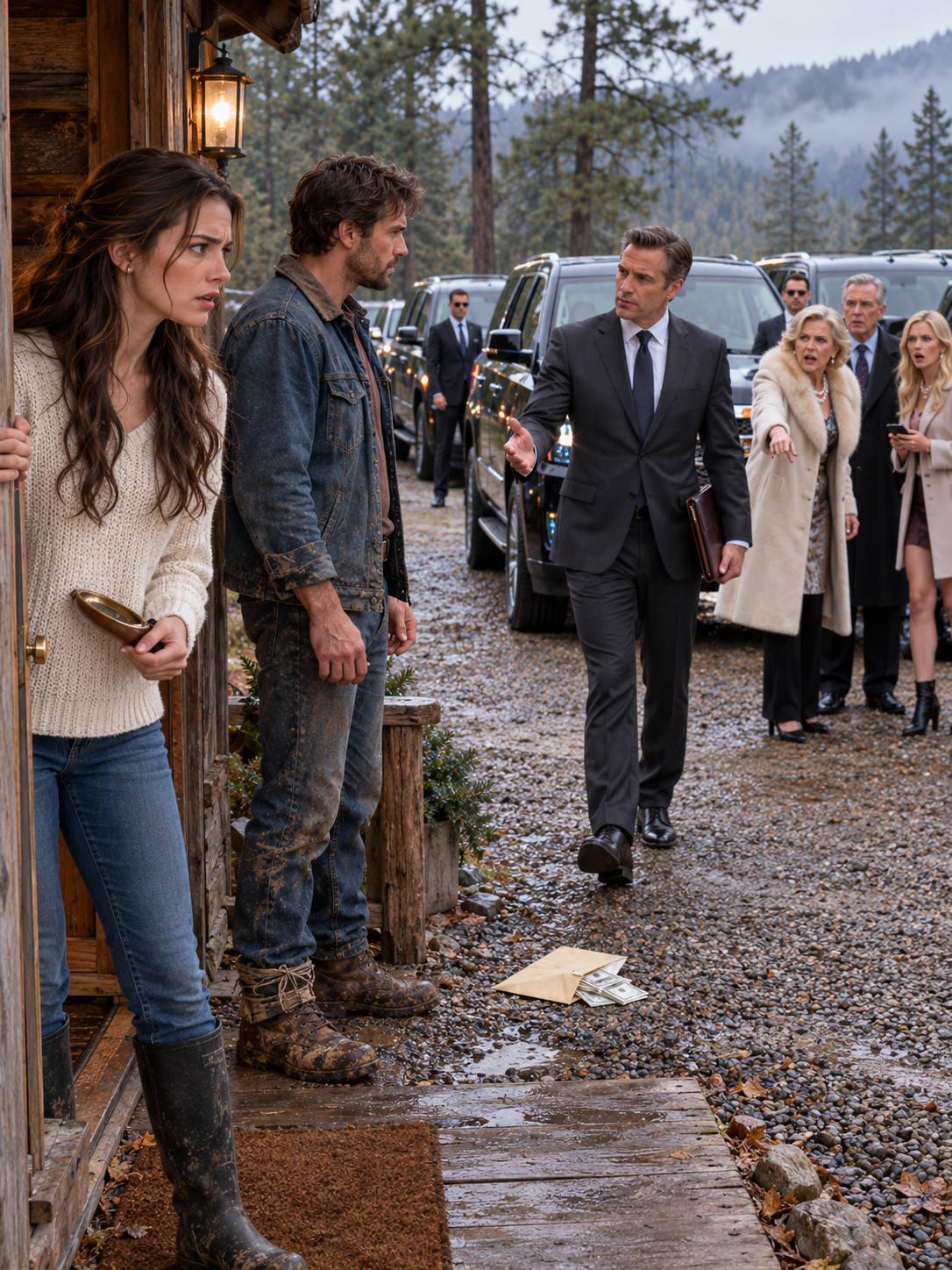
The next morning, I was at the cabin when my family arrived in an SUV.
I was wearing plain clothes and rubber boots. Victoria looked me over before she spoke.
“Daniela, honestly. Is this how you’re living now?”
I kept my hand on the doorframe. “What do you need?”
My father stepped around her. “We’ve come to bring you home. Brandon isn’t who we thought he was.”
Chloe’s eyes were swollen from crying. She looked past my father.
“Did you know?”
“I learned yesterday.”
“And you couldn’t warn me?”
“You took my phone, Chloe. You spent my wedding recording me and laughing. How did you expect me to call you?”
She looked down at the phone she was holding.
My father tried again. “Dani, please. Come home.”
He had come for me once Brandon was no longer useful. I waited to see whether he would acknowledge that. He only held out his hand.
“I don’t have a home in that house,” I said.
Victoria stepped forward, impatient with the conversation.
“We can end this arrangement. He’ll sign the papers.”
She took an envelope of cash from her purse and threw it at Caleb’s feet. It landed on the ground beside his boot.
“That should cover your trouble.”
He looked at her. “Pick it up.”
She stared at him as though he had misunderstood his part.
“It’s your envelope,” he said. “Don’t leave it outside my home.”
Then engines sounded along the road.
Four black luxury SUVs came into the clearing. A man in a charcoal suit stepped out of the first and walked toward Caleb. He barely glanced at the people standing by the door.
“Everything is ready, Mr. Vance. The board is waiting for your authorization.”
My father turned to Caleb. “Vanguard Northern Holdings?”
Caleb confirmed it.
Victoria drew her shoulders back. By the time she faced me again, her voice had softened.
“Darling, why didn’t you tell us?”
“Because I didn’t know.”
“Well, surely we can sit down and work this out. We’re all family.”
I looked at the envelope still lying near her feet.
“At the court, you thought marrying him would punish me. Finding out he has money doesn’t change what you meant to do.”
My father opened his mouth, then looked toward Victoria. Chloe remained beside the SUV.
I didn’t invite them inside.
By nine the next morning, workers, suppliers, and local reporters had gathered outside the mill. Word of the financial crisis had spread. People were waiting to hear whether the plant would close.
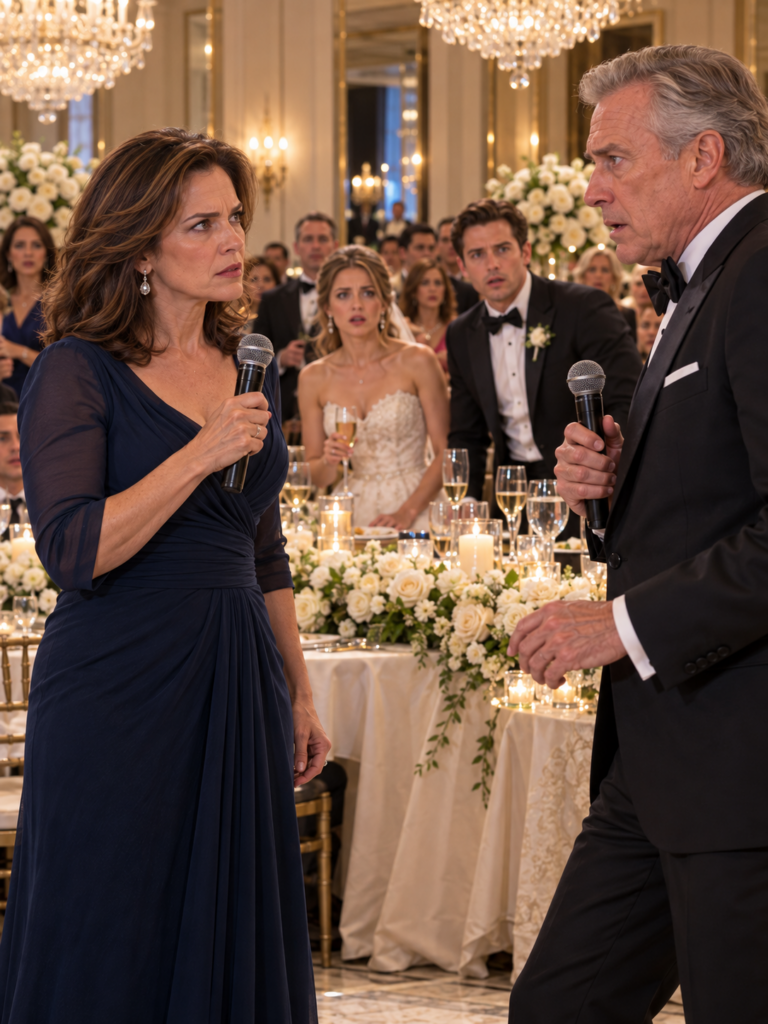
A temporary podium stood near the main entrance. My father, Victoria, and Chloe were in the front row. Brandon was there with police officers beside him. He had been arrested late the previous night after creditors exposed his fraudulent dealings.
For once, he had nothing to explain to me about supply chains.
I stood near the podium with the brass shuttle in my hand. The entrance behind it was one I had walked through for three years as an assistant expected to keep things moving. Now I had to speak about my mother’s ownership in front of people who were frightened for their paychecks.
Caleb went first.
In a suit, he looked like the man whose instructions I had overheard through the workshop window. I could still picture him by the court steps, wearing denim while Chloe directed her phone toward us.
He announced that Vanguard Northern Holdings had acquired the mill’s outstanding bank debt. Operations would continue. No employee would lose a job because of the previous management’s financial negligence.
Relief moved through the crowd. Some people clapped. Others turned to the person beside them, checking that they had heard correctly.
Caleb waited, then spoke again.
He explained that he had concealed his resources while investigating fraud. He also acknowledged that he had allowed the concealment to become a test of me.
“I had been betrayed before,” he said. “That didn’t give me the right to make Daniela prove herself. She treated me decently when she believed I had very little. I kept information from her. She deserved honesty.”
He turned toward me.
“I’m sorry.”
When he offered me the microphone, I took a moment to adjust my grip.
“I accept the apology,” I said. “It doesn’t mean the trust is repaired.”
He stepped back and let me continue.
I looked toward my family. Victoria was adjusting her purse on her lap, as though this were something she could wait out.
“The way I was treated at my wedding was wrong before anyone knew Caleb’s name or what his company was worth,” I said. “It would have been wrong if he spent his whole life hauling timber.”
A few workers who had recorded the occasion lowered their phones or looked away. I didn’t single them out. I had other things to show.
I raised the brass shuttle enough for people near the front to see the number. An archival photograph of my mother at a loom appeared on the display behind the podium.
“This belonged to Elena Villaseñor. My mother.”
I had to pause before I could go on.
“I was told she left this company in ruin. I was told I should be grateful to have any place here. The ownership records tell a different story.”
The display changed to the documents.
“She held a forty-two percent controlling stake. Those shares were supposed to be held for me until I turned twenty-five.”
I described the waiver filed a month after her death, when I was eleven. I identified my father’s genuine signature and the forged notarization. Then I turned to the accounting records showing income diverted into Victoria’s accounts.
The records gave the amounts. I named what the money had paid for: cars, renovations, jewelry, education. I didn’t have to give anyone a more dramatic description than the one already on the screen.
My father stood.
“I didn’t know it was forty-two percent.”
Victoria turned toward him. “You signed.”
“You said it was estate paperwork.”
“It was paperwork for the family.”
Their voices rose as though they were back in our dining room, deciding which version I would be required to accept.
I held the microphone closer.
“Dad, you were the adult. You were the one authorized to sign. You don’t get to treat your own signature as something that happened to you.”
He sat down slowly.
Mrs. Miller came forward and explained the letter. She described going to the house, Victoria’s promise to deliver it, and the pages returned to her mailbox. She acknowledged keeping them afterward. She didn’t leave out her failure to bring them to me.
Between her account and the audit, Victoria could no longer dismiss the letter as something I had misunderstood.
Chloe turned toward her mother.
“My tuition came from that money?”
Victoria tightened her grip on the purse.
“It was family money. Someone had to run the household. Your father could barely function after Elena died.”
My father came to the podium.
I moved aside enough to let him use the other microphone, but I kept mine. I didn’t know what he would say, and I wasn’t going to surrender the conversation again.
“I was weak,” he said. “She isn’t wrong about that.”
He faced me.
“Looking at you after your mother died hurt. Victoria told me you were difficult. She told me Elena had left us with nothing. Believing her was easier than dealing with what I didn’t want to face.”
He wiped at his cheek.
“I signed without reading. I let things happen because I didn’t want to ask questions. Then I let them send you away because I was afraid we’d lose the mill.”
I heard the admission I had wanted for years. It didn’t give me back those years.
He stepped closer and began to lower himself.
“Stay standing, Dad.”
He stopped.
“I can’t take care of you through this,” I said. “If you’re sorry, help the auditors. Help restore what was taken. Let me decide when I’m ready to talk about forgiveness.”
“Will you come home?”
“No.”
I didn’t say it loudly. I didn’t need to.
Chloe got to her feet. Victoria reached for her arm, and Chloe pulled away.
She looked at me instead of at the screen.
“Mom made me think if he cared about you, there wouldn’t be enough attention left for me,” she said. “But I kept going along with it because I liked what I got. You worked. You served us. I didn’t have to wonder whether any of it was fair.”
She was crying, but she stayed where she was.
“I’m sorry, Dani.”
“I hear you,” I said. “Knowing how it started doesn’t erase what you chose.”
“I’ll tell the investigators the truth.”
I nodded. That was something she could do. It was more useful than asking me to reassure her.
In the weeks that followed, Victoria faced charges of document forgery and grand larceny. Her personal assets were frozen for restitution. Brandon faced federal fraud charges.
I asked the legal teams to keep the proceedings from becoming a public spectacle. The announcement at the mill had been necessary. The employees needed answers about their jobs, and the ownership had to be addressed. I didn’t want every painful family moment repackaged for an audience.
When the audit was finished, Caleb formally transferred the forty-two percent stake back into my name. A court-appointed independent board would oversee operations.
He gave me the leather portfolio in his office.
“You can chair the board if you want,” he said.
I opened it on my lap.
“The shares are yours,” he continued. “That doesn’t depend on our marriage. If you want to leave, a driver will take you wherever you choose.”
I looked at him across the desk.
“And if I don’t leave?”
“Then I need to learn to make decisions with you.”
“You’ll have to do it. Saying it here isn’t enough.”
“I understand.”
I stayed. I didn’t pretend the papers in the portfolio proved anything about our marriage. They established my ownership. Whether we could build a life together would depend on what happened after I closed them.
Over the next year, I took an active role in managing the plant. I already knew the operations; I had to show that I could carry the responsibility that came with the authority. I went through figures, followed up across departments, and kept working when a title would have let me hand things off.
The workers’ respect grew from that work. I valued it more because it wasn’t automatic.
My father sold personal assets to help repay the company’s debts and moved into a small apartment nearby. He began calling before he visited. Sometimes I was willing to see him. Sometimes I needed space, and he learned to accept that without asking me to defend it.
Chloe took an entry-level position at a local firm. Earning her own living gave her responsibilities she could no longer hand to me.
There was no single conversation that settled either relationship. There were calls, boundaries, and choices made afterward. I paid more attention to those than to apologies.
Caleb learned the same lesson.
He stopped keeping secrets. He consulted me on our joint decisions, including the ones he could once have handled without a second thought. He gave me the information and waited for my answer. Some days that still mattered more than he could have known.
We kept the mountain cabin and renovated it. It remained a simple place among the pines. A year after the hurried marriage, I could stand in its main room without feeling that my life had been delivered there by someone else.
On our anniversary, we returned to the little magistrate court.
Mrs. Miller came with us. There were no relatives directing where I should stand, no phones held up to catch my reaction, and no rented dress slipping off my shoulders.
The rain had turned the gravel muddy again.
At the edge of the path, Caleb stopped beside me. He didn’t reach for me.
“May I carry you across?”
I looked at the wet ground, then at him.
The first time, I had been trying to keep a broken shoe beneath me while my family called instructions from behind. This time, Mrs. Miller was waiting ahead, and Caleb was waiting for my answer.
“Yes.”
He lifted me, and I rested my head against his shoulder. We crossed the muddy path at an easy pace. He had asked, I had answered, and neither of us needed to hurry. THE END !
I’ve shared the complete story, and I truly hope it touched your heart. If this story moved you, Please leave a comment, like and share the post. Thank you for reading.